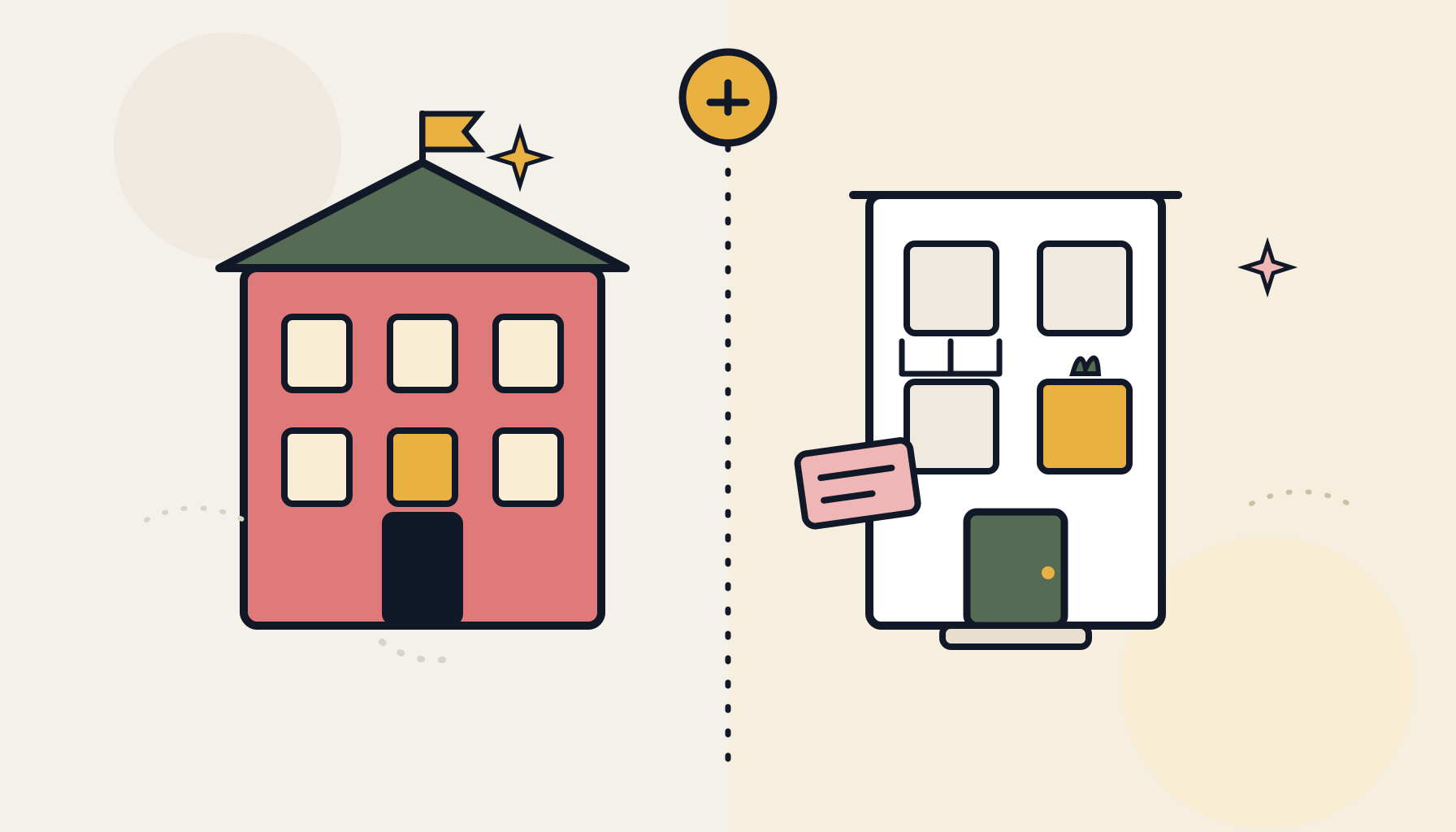
Quick answer: Compare total annual cost, not monthly rent. A dorm contract typically covers about nine months; a lease usually runs twelve. Once you add utilities, internet, furniture, insurance, parking and the food a meal plan was covering, the gap narrows a lot and sometimes reverses. Check your school's residency requirement first, because it may not be your decision.
Start here, before any spreadsheet. Plenty of schools require students to live on campus for two years, not one. Penn, Cal Poly San Luis Obispo, George Washington, American, Georgetown and San Diego State all publish two-year or multi-year residency requirements, each with its own exemption process. If yours does, the comparison below is academic until you have an approved exemption in hand.
Why the sticker comparison misleads
A dorm is usually priced per academic year and billed with tuition. An apartment is priced per month on a lease that very often runs the full twelve. Comparing "$900 a month off campus" against "$1,100 a month in the dorm" is comparing nine payments to twelve, and that alone can wipe out an apparent saving.
Do it as total cost for the year, with every line, and the answer stops being obvious in either direction.
The line items people forget
- Summer months. Twelve-month lease, nine-month school year. You pay for the gap whether or not you're there.
- Utilities. Electricity, gas, water, trash. Highly seasonal and easy to underestimate in a badly insulated student house.
- Internet. Included on campus, an install fee and a monthly bill off it.
- Furniture. A dorm room comes furnished. An empty apartment does not, and this is a real upfront number in the first month.
- Renters insurance. Often required by the lease.
- Parking, or transport. A permit, or a bus pass, or petrol, plus the time cost of a commute.
- Food. Dropping the meal plan does not mean food becomes free. Groceries plus the takeaways that happen when nobody has cooked.
- Deposit and fees. Security deposit, application fees, sometimes first and last month up front.
What the dorm price is actually buying
Worth listing honestly, because these are the things people miss in November of their first off-campus year:
- Utilities and internet with no separate bills to chase
- Furniture, and maintenance when something breaks
- No lease, no landlord, no deposit dispute
- A nine-month commitment rather than twelve
- Proximity, which is worth more in February than you think in April
- An RA and a housing office when something goes wrong
Subletting is not the safety net people assume
The standard plan for the summer gap is to sublet. Sometimes that works. Often it produces a smaller rent than you're paying, a lot of admin, and a stranger in your room. Some leases restrict or forbid it. Treat any summer income as a bonus in your maths rather than as a line you're relying on.
The non-financial factors that usually decide it
- How far. A fifteen-minute walk and a fifteen-minute drive with parking are very different lives.
- Who with. A lease binds you to people for twelve months in a way a dorm block does not.
- What you want the year to be. Off campus is quieter and more separate. Whether that reads as peaceful or isolating is personal, and worth being honest about.
- Cooking. A kitchen is a real upgrade if you'll use it and an expensive one if you won't.
How to actually run the comparison
- Confirm your residency requirement and whether you're eligible to move off
- Get the dorm's total published cost for the year, including the meal plan you'd keep
- Take the lease's monthly rent and multiply by the actual lease length, not the school year
- Add utilities, internet, insurance, parking and a realistic food budget
- Add the one-off costs: deposit, furniture, moving
- Divide both by the same number of months and compare
If the difference is small, decide on the non-financial factors, because at that point you're choosing a lifestyle and not saving money.
Timing trap. In many college towns, leases for the next academic year are signed in January and February, before room draw results. You may be asked to commit to off-campus before you know what room you would have got. Decide your threshold in advance so you're not making that call under pressure.
Build the real cost comparison in DormHQ.
Build My Dorm